Speech

Speech to Philadelphia Bar Association

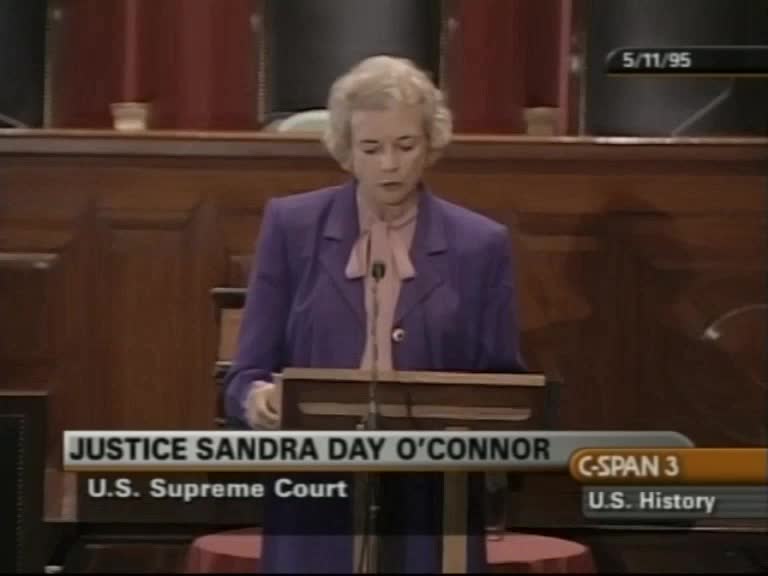
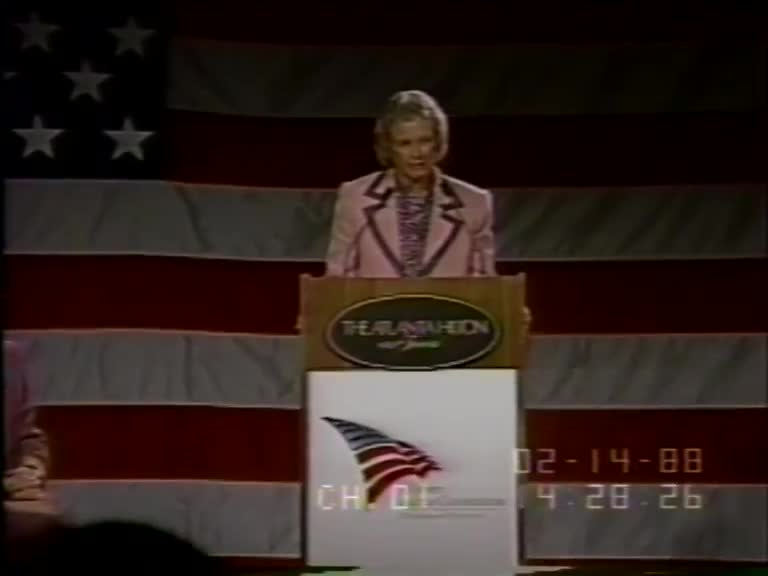
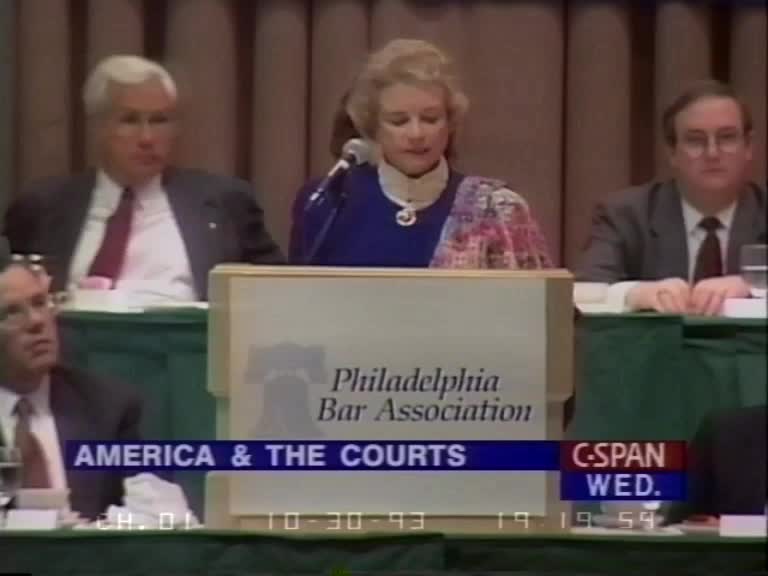
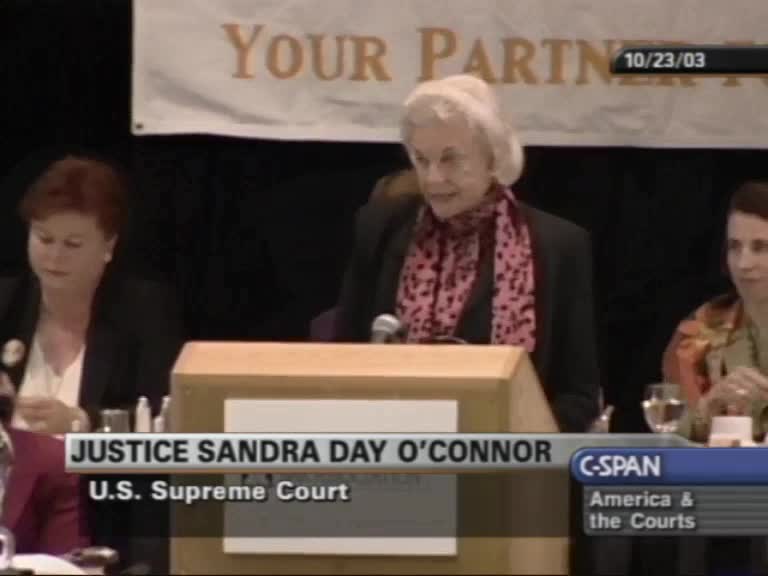
Sandra Day O’Connor Thank you. Thank you so much. Thank you. Thank you, Chancellor Dennis, for a very warm introduction. And all of you are getting your exercise jumping up and down and judge the Pyro, whom I’m so thrilled to be here to honor today. And Chief Judge, slow vector and Chief Justice nicks and other wonderful and distinguished judges and citizens and lawyers and members and friends of this Philadelphia Bar Association. This is really a special day, even for a cowgirl from from Arizona. And I’m so very honored that you have decided to establish a Sandra Day O’Connor award. I’m honored that you chose to give this award my name. And more importantly, I’m delighted that you have taken the opportunity to recognize the significant accomplishments of women in the law with the publication of this marvelous book with the initiation of this award, and especially to recognize those women who like judge Shapiro have advocated the Advancement of Women in the profession, and the community and who have a reputation for being mentors to other women. Historically, encourage men or women to pursue careers and the legal profession was rare in the early part of the century, called Columbia Law School committee member George Templeton strong, wrote in his diary application from three infatuated young women to Columbia Law School. No woman shall degrade herself by practicing law in New York, especially if I can save her. Most of the early women legal pioneers faced a profession in a society
Speech

Speech to American Bar Association on law and national security

Unknown Speaker Ladies and gentlemen, if you please. I’d first before introducing Justice O’Connor, I’d like to just say a brief word about the special edition of the National Security Law Journal, which is here on the tables. That includes, among other things, the eulogy that Justice O’Connor gave at justice, palace funeral, and a number of other remarks. And justice pals honor and in as much as this is a special tribute to him. This this dinner this evening. I like to thank every meeting of this committee as a tribute to him. But this is a special tribute. I invite you to pick a copy up on your way out and make it part of your power collection. I’m particularly pleased to have been given the assignment to introduce Justice O’Connor, to the family, to the committee and to its broader family. In part two, because of the special place that she had in the affections of lewis powell and the special esteem the professional esteem that he had for her. I’ve been instructed to make my introductions snappy, she shakes her head. And therefore I won’t pause long over the record facts which are well known but quite astonishing. So I’ll just glide by them quickly. Coming off a large cattle ranch near the New Mexico border, growing up there getting to Stanford at age 16. If I counted correctly, getting both her bachelor’s degree and Law Degree in six years. I think I’m right about that. finishing third in her class, and then finding herself unable to persuade any top law firm on the west

Speech

Speech on women in the law to the Philadelphia Bar Association

Sandra Day O’Connor Thank you, Audrey, Kelly, for your wonderful presentations today. And what a delight it is for me to be here when you receive the Sandra Day O’Connor award that you participated and establishing 10 years ago. It’s great and to be and to be present. When so many of the previous Sandra Day O’Connor award winners could be here. And what a wonderful group have been selected. The Philadelphia Bar Association has been particularly kind to the female division of the United States Supreme Court. I’m truly delighted that you’ve established now an annual justice Ruth Bader Ginsburg legal writing award, it is exceedingly appropriate because Justice Ginsburg rights with a very, and I careful and no one among us doesn’t matter. So it’s a real special treat to be here today with Justice Ginsburg, as that effort is launched. And on hand, usually at your special events in Philadelphia is judge Norma Schapiro over here at the table today, whose career here in Philadelphia has spanned more than five remarkable decades. She has said that one of her favorite quotations is from the ancient Roman official Gaius who poignantly noted that one who helps the wandering traveler does as it were, light another’s lamp by their own, and it gives no less light because it helped another. And as the first woman appointed to the United States District Court of the Eastern District of Pennsylvania, her live show in dark corners where women never before had traveled. And she has led her light

Speech

Speech on the participation of U.S. Supreme Court Justice Robert Jackson in the Nuremberg Trials after World War II

Unknown Speaker Thank you. Sandra Day O’Connor Welcome all of you. It feels a little odd to me to be on this side of that bench. But here I am, and very happy to be here for this most interesting topic tonight. And I would like to say a special thank you to Leon Silverman for his marvelous work as president of the Supreme Court Historical Society. He’s really been he has spent so much time and effort on it. I think it’s really worthwhile and I’m constantly grateful for all that he’s done. This series, of course, commemorates the 50th anniversary of the end of World War Two and like every other instance Tuition in our country, the Supreme Court was affected by the war. And unlike everyone else in the country at the time, Supreme Court justices were involved in the war effort. There is an exhibit on the ground floor that illustrates some of that. But today we focus our attention on the very direct involvement of justice Robert Jackson, who took leave as a sitting justice in order to serve as the United States chief counsel to the Nuremberg trials. From my perspective, I think the most remarkable aspect of justice jackson, the service and Nuremberg is that he did it at all. The very idea of an independent judiciary would seem to require that justice is fully discharged their judicial function, and only their judicial function file a member of the court, but I have to admit that the practice of justices Setting political appointments and undertaking non judicial duties has an historical

Speech

Speech on the influence of money in state judicial races

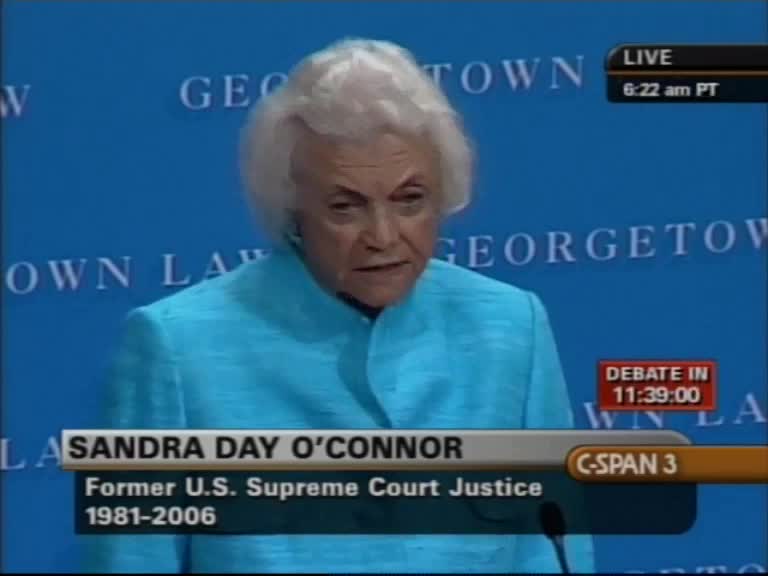
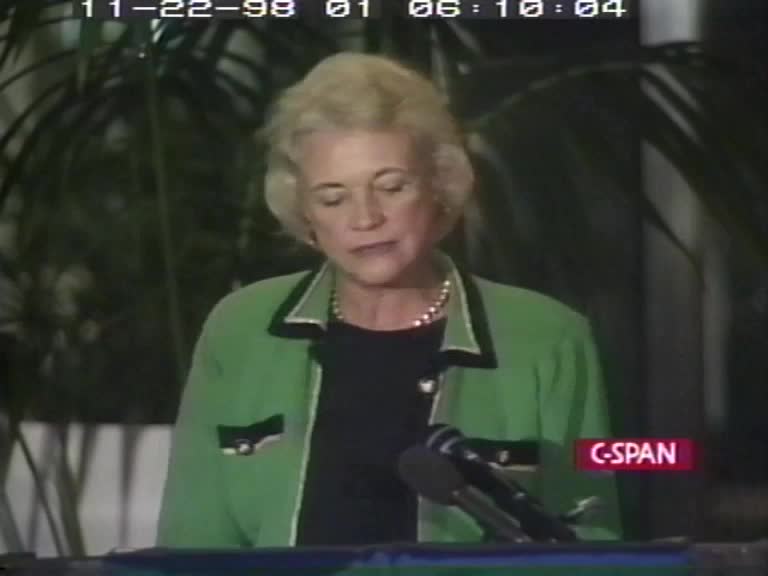
Sandra Day O’Connor Good morning. And Thank you Dean olenicoff for once again, letting us have a meeting here at this distinguished law school. And thank each and every one of you in this room for being part of this today. We’ve talked for two years previously about aspects of the importance of an independent judiciary. And we’ve narrowed the focus of this year’s conference to take a look at business and corporations in their role in the maintenance of an independent judiciary. And I think that corporations and businesses are in a special position by virtue of their economic importance in our country. And we’re surely focused on that these days, you matter? And we need to know what will help make our system recover quickly and do well. Corporations stand to lose large amounts if in judicial independence waivers or if we have methods of resolving disputes that are not fair and effective. And there are a number of ways in which businesses view the current court situation as a failure. Some see runaway juries creating unpredictability, some see litigation delay and expensive discovery processes that greatly increase the cost and time of litigation. And the judiciary possibly is increasingly made up of judges, younger, who lack experience with complex business issues. And these are real concerns that need to be addressed. And there’s not total satisfaction with alternative dispute resolution either. So we’re going to talk about all of these factors. And these are concerns. And that’s

Speech

Speech on legal careers at Paint Branch High School, Burtonsville, Maryland

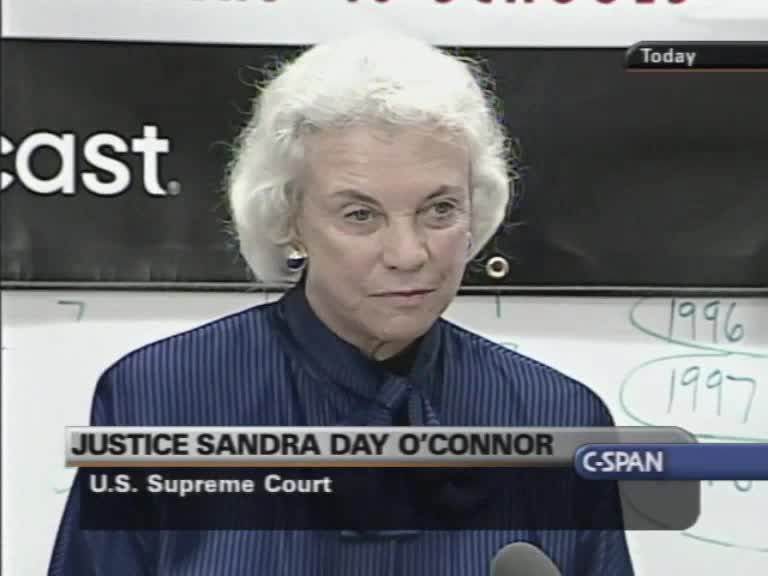
Sandra Day O’Connor Thank you. Now first of all, we have to get everybody seated, ’cause I’m going to be at this for a while there’s a chair there and there’s one over there. Need to there’s another one here. But I’m to work, right. So it’s Law Day today, May 1. May 1 was celebrated in the former Soviet Union as a day to remember the ascendancy of the Communist Party there. And perhaps it was in reaction to that, that we started celebrating May 1 as Law Day in this country. And it’s become a day that we care about, at least in the legal profession we do. And I hope other citizens do too, because it does give us an opportunity to talk about the role of law in our society, the role of courts and a fair judicial system. And that’s what I’m involved in, in my work today. And it didn’t start out that way. I was told you might like to know how I started out. I grew up on a cattle ranch in the dry, arid Southwest, it was half in Arizona and half a New Mexico we straddle the state line. And the ranch was quite remote we were 35 miles from and it was a life built around the small group of people who ran the ranch my parents and the people who were there. And we were not many in numbers. And the people who work there, the Cowboys tended to be single man who spent their whole lives there. We had at least four who stayed until their ultimate death as old man and spent respectively something like 70 years, they’re over 50 in three other cases.

So it was a small knit group that tried to

Speech

Speech on judicial independence to the National Governors Association

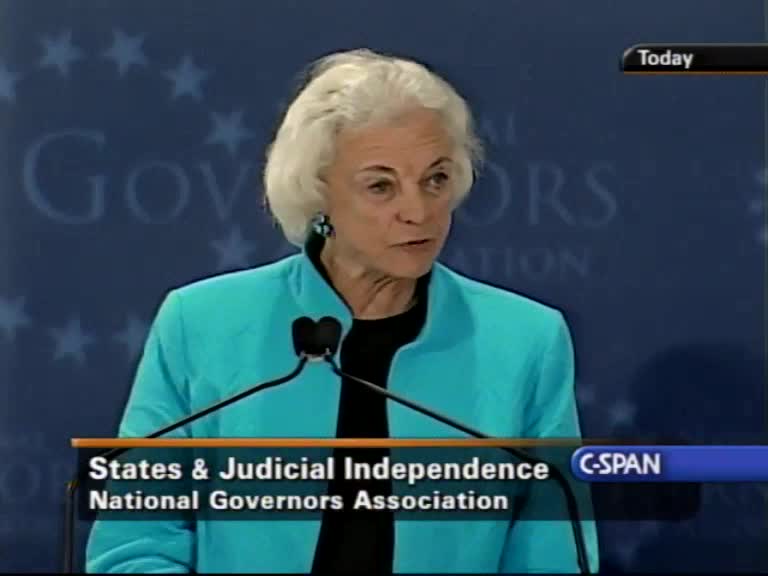
Unknown Speaker So Connor, Sandra Day O’Connor don’t do that. Thank you very much. Governor Napolitano is doing an outstanding job in my home state. And I was so appreciative when, as chairman of this group, she agreed that I could have a few words with you this morning. And that Tom Phillips, the former Chief Justice of the Texas Supreme Court, could also be part of this package and we hope to be brief and our remarks so that we might spend some time answering questions if there are some and Governor Granholm you’re a great hostess. I had not previously been to the Northern part of Michigan and it’s beautiful. It’s been such a treat to glimpse Traverse City and the surroundings. I just, it’s so enchanting, I hope to come back. Now, it’s Elementary, high school civics that we have three branches of government, not just governors and not just legislators. And they regulate each other by a very intricate system of checks and balances. And the main check the judicial branch has on the others is the power to declare statutes or executive acts unconstitutional. Although sometimes judges might check the political branches in a softer way merely by interpreting a statute in light of constitutional values, or by ruling that a regulation or executive act is not authorized by statute, but whatever courts do, the courts have the power to make The president or Congress, or a governor or a state legislature, really, really angry. In fact, if judges do not make the man some of the time,

Speech

Speech at Women and the Constitution Conference

Sandra Day O’Connor Thank you. Thank you. Thank you. Sandra Day O’Connor Thank you very much, Dean Knowles, Mrs. Carter, and Mrs. Johnson, and Ms. Powell and participants and guess this is a very special event. The bicentennial of our Constitution has been the subject of more than a year of celebrations and observances. It has produced some dramatic changes. For me and my colleagues on the Supreme Court. It was in order to better prepare for the 200th birthday of our national charter that Chief Justice Warren burger stepped down. One of my colleagues and a former Arizona William Rehnquist has become our 16th Chief Justice Antonin Scalia, former Court of Appeals judge has joined us and next week, in a very few days, we will also be joined on the court by Court of Appeals judge Anthony Kennedy. Now it seems natural for supreme court justices to be enthusiastic about the bicentennial of the document. We spend so many of our waking hours thinking and arguing about so many pages of the United States reports writing about but it is perhaps not so common for most people today to examine our Constitution. Although 200 years ago, most Americans debated the merits of the proposed Constitution. Recent polls indicate that today almost half of our citizens do not know why the constitution was drafted, nor even what is meant by the Bill of Rights 75% erroneously believe the Constitution guarantees of free public education 49% erroneous Lee believe the President can suspend the constitution

Speech

Speech at the opening of the National Constitution Center

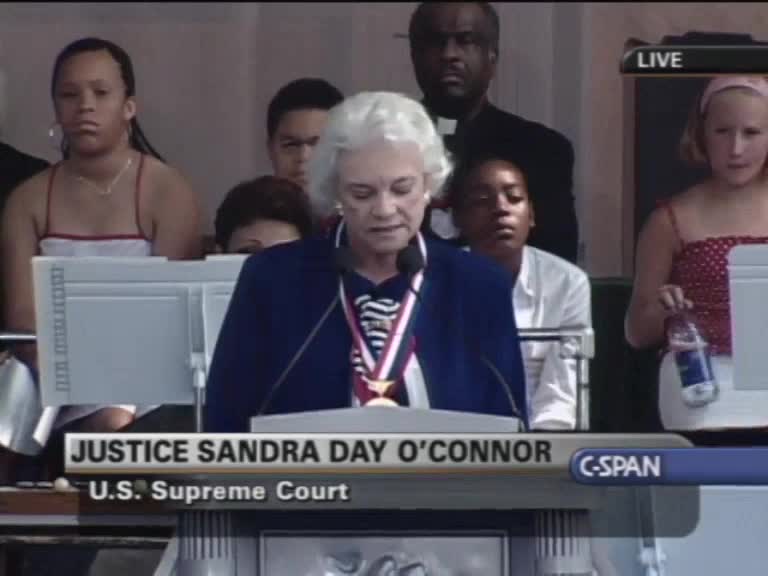
John Street Ladies and gentlemen, please join me in honoring the 2003 recipient of the Philadelphia Liberty metal. United States Supreme Court Justice Sandra Day. Oh, Sandra Day O’Connor, a great American who has demonstrated leadership and vision and carriage in the pursuit of liberty. John Street Justice O’Connor, we are proud to welcome you to our city, and our Sunoco, welcome America celebration. We are particularly pleased to present you with the Philadelphia Liberty medal on this awesome and historic location, the opening of this spectacular National Constitution Center. Sandra Day O’Connor Thank you, Mayor Street and thank all of you here today for joining in this absolutely wonderful occasion, as we celebrate both our nation’s birthday and the opening of the National Constitution Center here in the great city of Philadelphia.

The Constitution Center and independent Hall, together with the Liberty Bell, form a place that every American should visit. It will contribute each and every day to the reinforcement of the basic principles that bind us together as a nation and a people. And Joe Torsella, thank you so much for your perseverance, and for reminding us today that even supreme court justices make mistakes.

On May 25, 1787, here in Philadelphia, a quorum of delegates from seven states met in answer to the call from the Annapolis Convention to draft what became the Constitution of the United States. The delegates unanimously selected George Washington as president

Speech

Speech at the National Women’s History Month Celebration

MS. KAREN P. TANDY: Good morning. I am the administrator of the Drug Enforcement Administration and it is my honor thank you for being here today and to ask you to please join me in welcoming the Attorney General and Justice O’Connor for today’s event.

I would like to point out to some special people with us this morning, first, Mr. John O’Connor, the husband of Justice O’Connor, and Mrs. Rebecca Gonzales, the wife of the Attorney General.

I ask you now to please rise for the presentation of the Flag by Girl Scout Brownie Troop Number 470 and for the singing of the National Anthem by Ms. Anamer Castrello.

You may be seated. Please join me in thanking these very special young Trail Blazers for the future of women, the Brownie Girl Scouts.

And, Ms. Castrello, thank you. Thank you for that stirring rendition of the National Anthem.

Welcome to all of you today. When I think about our theme, “Women: The Builders of Communities and Dreams,” I cannot help but think about some of those little known women from the American Revolutionary period who made it possible for us to have our communities today because of what they did back then in building our great nation.

The demure hoop-skirted women of the 1700s were the same women who tricked the enemy. The Red Coats met their match when they invaded the home of Mrs. Murray, a woman known only to us as Mrs. Murray, for Mrs. Murray plied the British generals with enough liquor that the small band of American soldiers were able to sneak